
Learn how to beat all websites for inclusion in AI answers!
Want to discover how to own generative engine optimization (GEO) with super-secret AI-specific metadata? Get your brand named with product links in AI overviews! Learn “vibe marketing” in only 10 minutes! Grow back your thinning hair and have Sting calling you for sex advice! Smash that like button now for GEO nirvana!

No. This isn’t that article. We’ll let the gurus and ninjas handle those hollow promises.
This is an article that cuts through the clutter and reveals what actually influences generative engine optimization — without the gimmicks. And, we threw in a few quick tips, because we’re givers.
From Keywords to Conversations: The New Search Behavior
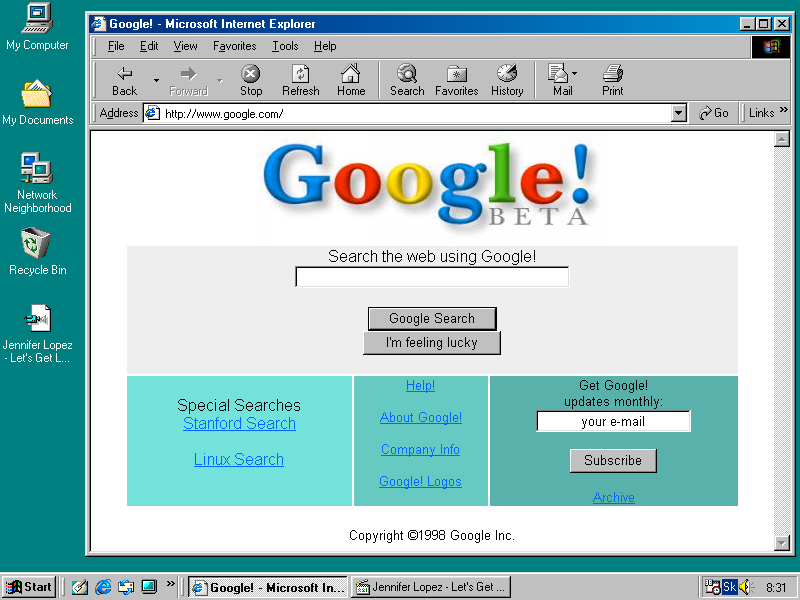
Like a lot of tech nerds, we cut our teeth during the rise of Google’s algorithm dominance. Back then, the game was simple: make a few site changes, resubmit your sitemap, pray to Page & Brin, and hope for rain. We trained ourselves — and our websites — to speak in stripped-down keywords, because that’s all Google needed to deliver results.
The World Wide Web: “Welcome. How can we be of assistance today?”
Us: “Navy Neo-Prep Rugby Shirt Free Shipping.”
But the rise of AI, zero-click results, voice assistants, and TikTok has flipped everything again. We’re back to asking questions in full sentences.
Conversational search has taken over — which, if you think about it, makes sense. Nobody talks to Alexa or Siri with single keywords. (Siri’s been around since 2011!) This shift isn’t new; it’s just finally mainstream.
That’s why platforms like Reddit matter so much now. AI models trained on real conversations naturally pull from Reddit’s endless threads of community-based Q&A. If you’re not participating on Reddit, you’re missing a huge opportunity to show up in AI overviews. (Read more on Search Engine Journal)
The rule of Reddit is clear: add genuine value, disclose affiliations, and don’t spam. If you try to sneak in a sales pitch, you’ll get roasted — fast. Even advertising on Reddit helps indirectly by sparking new conversations that AI later ingests.

User-First Content Still Wins
Despite all the noise about GEO, here’s the quiet truth: you don’t really do anything different.
The same SEO fundamentals still matter most. Search engines (and now AI engines) reward content that’s useful, clear, and trustworthy. That means natural language content. You know, the kind people actually search for.
Don’t just wedge in keywords like “gluten-free pasta” and hope for the best. Instead, write the way people talk to ChatGPT or Gemini: “What’s the best gluten-free pasta that tastes like regular pasta?”

Those complete queries are exactly what AI overviews are trying to answer. If your content mirrors that natural phrasing, you’re not just optimizing for AI, you’re optimizing for humans.
That has always been the golden rule of SEO: what’s good for the user is good for optimization. When you improve UX and help buyers get what they need faster, visibility follows.
Tools for the New Search Landscape
As the rules shift, tools are evolving to keep pace. Case in point: Yoast SEO AI+.
You may already know Yoast as the gold standard for on-site SEO. Their new AI+ service takes it further, showing you how your brand appears in different AI engines and revealing brand-related queries. It even offers competitor insights so you can see how others are surfacing in AI overviews compared to you.
It’s not a magic bullet, but it’s one of the first tools built specifically for the AI search era. And that makes it worth your attention.
Shape Redefining the “Win”
Even when you land in an AI overview with a reference link or brand mention, you might not get the click. That’s okay. Take the “W.” Every mention builds brand awareness, affinity, and market share — even without traffic. GEO isn’t about tricking an algorithm; it’s about showing up where your buyers are looking.
The system is shifting daily, and we’re all learning in real time. The best path forward is simple: experiment, play, test boundaries, and stay curious.
It’s exactly what we’re doing.